AI Dubbing vs Human Voiceover for Multilingual Video
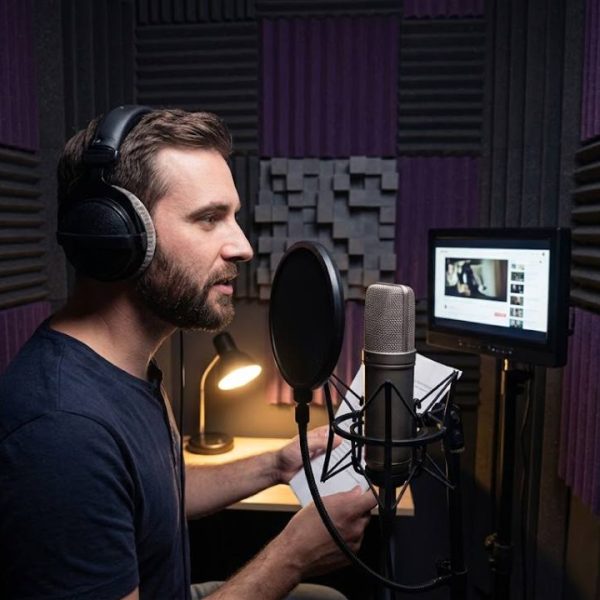
Subtitles open a video to new audiences, but some viewers simply prefer to listen. Children, people watching on a phone while cooking or commuting, and audiences in countries with a strong dubbing tradition all respond better to audio in their own language. Until recently, that meant hiring voice actors and booking studios. Today, AI dubbing can produce a translated voice track in minutes. The question is no longer whether you can dub a video cheaply, but when you should.
This article compares AI dubbing and human voiceover honestly, looks at where each one shines and offers a practical way to decide for your own content.
What AI dubbing actually does
Modern AI dubbing tools combine several steps. They transcribe the original audio, translate the transcript, generate speech with a synthetic voice and try to match timing to the original. Some can clone the original speaker's voice so the translated version sounds like the same person. More advanced systems even adjust lip movements on screen.
The results can be impressive. A short explainer video can be available in Spanish, German and Japanese the same afternoon it was recorded in English. For speed and volume, AI is hard to beat.
Where AI dubbing works well
- Internal training videos and company updates.
- Product tutorials with clear, neutral narration.
- Large libraries of older content that would never justify studio costs.
- Quick tests to see whether a new language market responds at all.
- Social media clips with a short shelf life.
In these cases, the audience mainly wants information. A slightly flat delivery or the occasional odd stress on a word is acceptable if the content is clear.
Where human voiceover still wins
Human voice actors bring things that software still struggles with: emotion, timing, humour and cultural nuance. A brand film, a documentary, an audiobook trailer or a children's series depends on performance as much as words. Listeners notice when excitement sounds forced or when a pause lands in the wrong place.
Human talent also handles difficult material better. Medical explanations, legal disclaimers and sensitive topics such as health or grief need a voice that sounds trustworthy and careful. A mispronounced drug name or an awkward tone in a safety message can damage credibility far more than any saving on budget.
The script matters more than the voice
Whether you choose AI or human talent, the translated script is the foundation. Machine translation alone often produces sentences that are technically correct but too long to fit the original timing, or too stiff to sound natural when spoken aloud. Dubbing scripts need adaptation: shorter phrases, conversational word order and attention to how sentences sound rather than how they look.
Companies localising video from German into English, for example, often rely on professional german to english translation services before recording, because German sentences tend to place key verbs at the end and need restructuring to sound natural in English speech. The same applies to ukrainian to english translation for documentaries and interviews, where tone and context carry as much meaning as the words themselves.
Managing many languages at once
Once a company dubs or subtitles into more than two or three languages, coordination becomes the real challenge. Scripts change, product names are updated, reviewers in different countries send feedback at different times. Teams handling this volume increasingly use an ai powered translation management system to keep source scripts, translations, glossaries and approvals in one place, so the latest version of every script is always clear before anyone records.
Most dubbing problems are not voice problems. They are version control problems. A perfectly recorded line based on last week's script still has to be redone.
Cost and time compared
AI dubbing costs a fraction of studio voiceover and is almost instant. Human voiceover requires casting, recording, editing and sometimes several rounds of retakes. For a ten-minute video in five languages, the difference can be weeks and thousands in budget.
However, hidden costs exist on the AI side too. Someone still needs to review every language, fix mispronunciations, adjust timing and check that the tone fits the brand. Without that review, mistakes go public.
A hybrid approach
Many creators now mix both methods. They use human voice actors for flagship content and the main markets, and AI dubbing for long-tail languages, older videos or internal material. Some use AI to create a quick draft, test it with a small audience and then invest in human recording only where viewer numbers justify it.
Platform features to know
Video platforms are adding multilingual features of their own. YouTube, for instance, allows creators to upload multiple audio tracks and subtitle files for the same video, so viewers choose their language without separate uploads. The YouTube Help Center explains how subtitles and captions work on the platform.
Questions to ask before you decide
- Who is the audience, and how important is emotional connection?
- How long will this video stay online?
- Does the content include legal, medical or safety information?
- Is the original speaker's personality part of the brand?
- Do you have native speakers available to review the result?
Choosing with confidence
AI dubbing is a powerful tool that makes multilingual video possible for teams that could never afford it before. Human voiceover remains the better choice when performance, trust and nuance matter. The smartest strategy is not choosing one side but knowing which tool fits each video.